
Tradition in the Orthodox Church (Part V)
It is interesting to emphasize another form of the Synodical System, which accentuates the importance of Holy Tradition: the Eucharist itself. In the Divine Eucharist, all Orthodox Christians meet together and in absolute agreement, in Doctrine and practice witness the presence of the Holy Trinity on the altar of the Church. The bishop and the priest pray to God the Father to send the Holy Spirit and transform the bread and wine into the very Body and Blood of Christ.

My beloved spiritual children in Christ Our Only True God and Our Only True Savior,
CHRIST IS IN OUR MIDST! HE WAS, IS, AND EVER SHALL BE.
+
TRADITION IN THE ORTHODOX CHURCH (Part V)
By George Bebis Ph.D.
The Living Tradition of the Eucharist
It is interesting to emphasize another form of the Synodical System, which accentuates the importance of Holy Tradition: the Eucharist itself. In the Divine Eucharist, all Orthodox Christians meet together and in absolute agreement, in Doctrine and practice witness the presence of the Holy Trinity on the altar of the Church. The bishop and the priest pray to God the Father to send the Holy Spirit and transform the bread and wine into the very Body and Blood of Christ. All the faithful believers present are called to receive Holy Communion and become members of the Body of Christ in the Liturgy, as it was instituted by the Lord Himself, the whole Church meets every day to proclaim and live in the oneness and the unity of faith in Jesus Christ. In the Orthodox liturgy, we see all the history of Tradition embodied in the Body and Blood of Christ. Saint Gregory Palamas writes the following in connection with the Holy Eucharist.
"We hold fast to all the Traditions of the Church, written and or unwritten, and above all to the most mystical and sacred celebration and communion and assembly (synaxis), whereby all other rites are made perfect." (Letter to Dionysius, 7).
This emphasis on the Divine Eucharist shows that Holy Tradition is a dynamic way of life unfolding continuously in the liturgical framework of the Church. By participating in the Holy Eucharist, we proclaim our Tradition as living and active members of the Church.
Of course, to live according to the Traditions of the Orthodox Church, to participate, fully, in the life of Tradition is not an easy task. We need the imparting of the Holy Spirit, in order to live in a mystical and mysterious way the life of Christ. As Saint Gregory Palamas wrote:
"All those dogmas which are now openly proclaimed in the Church and made known to all alike, were previously mysteries foreseen only by the Prophets through the Spirit. In the same way the blessings promised to the Saints in the age to come are at the present stage of the Gospel dispensation still mysteries, imparted to and foreseen by those whom the Spirit counts worthy, yet only in a partial way and in the form of a pledge" (Tomos of the Holy Mountain, Preface.)
Thus, the Holy Tradition of the Church is a living reality, which the Orthodox Christians must live daily in a mystical way. By adhering to the teaching of the Holy Scripture, the Ecumenical Councils, and the Patristic writings, by observing the holy Canons of the Church, by frequently participating in the Holy Eucharist, where Tradition becomes an empirical reality, we are the members of the Body of Christ and are led to the "contemplation of God" to repeat a beautiful expression of Saint Neilos (5th century), Saint Gregory Palamas, in summing up the Patristic Doctrine of Christian life, suggests that the ultimate purpose of man's life is theoptia that is, seeing God. (In Defense of the Hesychasts, 1,3, 42) or to use Saint Gregory of Nyssa' s words, man's life is a strenuous and endless ascent towards God, that is, deification (theosis). (On the Life of Moses, ed. by W. Jaeger, 112ff.).
Orthodox Holy Tradition, therefore, is not a dead letter, a collection of dogmas and practices of the past. It is the history of salvation. It is the life of the Holy Spirit, who constantly illuminates us in order for all Orthodox Christians to become sons and daughters of God, living in the Divine Light of the All-Blessed Trinity. (Source: Greek Orthodox Archdiocese of America)
_______________________
Please note: It is most important that no one is allowed to modify, marginalize or change our Holy Tradition. There are those who want to raze or level our Holy Orthodox Church so that it is the same as every other religion. These enemies of the Orthodox Church consider her as a "relic", "outdate", "backward-looking", "living in the past", "inflexible", "too dogmatic", "unyielding", "anachronistic", etc. This threatening, radical, and most dangerous element within the Church is attempting to change forcefully and deviously the Orthodox Church from within so that it will fall in line with all other Christian and non-Christian religions.
We only need to look at the destructive results of other religions who have attempted to so-called "modernize" their tradition. Do we need to follow their failed attempts and therefore sacrifice the true identity and authenticity of our Holy Orthodox Church? What will that accomplish? Our Holy Orthodox Church does not need any "improvements" or changes to conform to a gentile, paganistic, and secular world and society. The Orthodox Church enjoys the fullness of the Christian faith and truth. That is why it is the only Orthodox Christian church in the world.
____________________________
"Glory Be To GOD For All Things!" - Saint John Chrysostomos
+++
With sincere agape in His Holy Diakonia (Ministry),
The sinner and unworthy servant of God
+Father George
Tradition in the Orthodox Church (Part IV)
As has already been noted, the authority, the power, and the impact of Holy Tradition are found in the Holy Scripture and the Patristic teaching as a total and unified expression of the revelation of the Holy Trinity in the world. Christ, as the ultimate and Supreme Teacher, Shepherd and King, exercises His authority in the Holy Spirit through the holy Apostles and their successors.

My beloved spiritual children in Christ Our Only True God and Our Only True Savior,
CHRIST IS IN OUR MIDST! HE WAS, IS, AND EVER SHALL BE.
+
TRADITION IN THE ORTHODOX CHURCH (Part IV)
By George Bebis Ph.D.
The Ecumenical Councils
As has already been noted, the authority, the power, and the impact of Holy Tradition are found in the Holy Scripture and the Patristic teaching as a total and unified expression of the revelation of the Holy Trinity in the world. Christ, as the ultimate and Supreme Teacher, Shepherd and King, exercises His authority in the Holy Spirit through the holy Apostles and their successors. The holy Apostles, their successors and the whole people of God are the Body of Christ extending throughout the ages. "There is no private teaching save the common doctrine of the Catholic Church," wrote Saint Maximos the Confessor (7th century; Migne PG. 90, 120C). In the reply to Pope Pius IX in 1848, the Eastern Orthodox Patriarchs wrote that "the Defender of the faith is the very body of the Church, that is the people, who want their faith kept constantly unvarying and in agreement with the Fathers." Thus the clergy and the people (laity) are both responsible for the preservation of the authentic and genuine Holy Tradition in and through the life of the Church. In this context, particularly, the Ecumenical Councils of the Church, and more generally, the Local Churches of the Church are of great importance. The first Council Synod of the Church was the Apostolic Synod, which took place in Jerusalem in 51 A.D. Later, bishops used to meet either locally, or on the "ecumenical" or "universal", the all-encompassing level of the universal Christian empire, the oikoumene, in order to discuss and solve serious Dogmatic and Canonical issues which had arisen.
The Orthodox Church accepts the following Seven Ecumenical Councils:
The Council of Nicea in 325 A.D., which discussed and condemned the heresy of Arianism.
The Council of Constantinople in 381 A.D. which principally condemned the heresy of Apollinarianism.
The Council of Ephesus in 431 A.D. which condemned the heresy of Nestorianism.
The Council of Chalcedon in 451 A.D., which condemned the heresy of Monophysitism.
The Second Council of Constantinople in 553 A.D., which condemned Origen and other heretics.
The Third Council of Constantinople in 680-81 A.D., which condemned the heresy of Monothelitism.
The Second Council of Nicea, in 787 A.D., which condemned the heresy of Iconoclasm.
The Orthodox Church also assigns ecumenical status to the Council in Trullo in 692 A.D., which took place in Constantinople. Eastern bishops took part in it, and they passed disciplinary Canons to complete the work of the Fifth and the Sixth Ecumenical Councils and, thus, it is known as the Fifth-Sixth (Quinesext o penthekti).
These Ecumenical Councils became instruments for formulating the dogmatic teachings of the Church, for fighting against heresies and schisms and promoting the common and unifying Tradition of the Church which secures her unity in the bond of love and faith. Although convened by the Emperors, the Church Holy Fathers who participated came from almost all the local diocese of the Roman Empire, thus expressing the faith and practice of the Universal Church. Their decisions have been accepted by the clergy and the laity of all times, making their validity indisputable. The holy Fathers followed the Holy Scripture as well as the Apostolic and Patristic Tradition in general, meeting under the guidance of the Holy Spirit. Saint Constantine the Great, who convened the First Ecumenical Council at Nicea, wrote that:
"...the resolution of the three hundred holy bishops is nothing else than that the determination of the Son of God especially of the Holy Spirit, pressing upon the minds of such great men brought to light the Divine purpose." (Socrates, Church History, 1:9).
In the Fourth Ecumenical Council of Chalcedon, it was stated that:
"The Fathers defined everything perfectly; he who goes against this is anathema; no one adds, no one takes away" (Acta Council, II, 1.)
Saba, the bishop of Paltus in Syria in the fifth century, speaking about the Council of Nicea
said:
"Our Fathers who met in Nicea did not make their declarations of themselves but spoke as the Holy Spirit dictated".
"Following the Fathers" becomes a fixed expression in the minutes and the declarations of the Ecumenical Councils as well as of the local ones. Thus, the Ecumenical Councils and also some local councils, which later received universal acceptance, express the infallible teaching of the Church, a teaching which is irrevocable.
Are the Ecumenical Councils of the Church the only infallible and correct instruments in proclaiming and implementing the faith of the Church? Certainly, no bishops by themselves, no local councils, no theologians can teach the faith by themselves alone. The Ecumenical Councils are among the most important means which inscribe, proclaim, and implement the faith of the Church, but only in conjunction with Holy Scripture, and the Tradition. The Ecumenical Councils are an integral part of the ongoing Tradition of the Church. Thus the Orthodox Church claims that she has kept intact the faith of the first seven Ecumenical Councils. (Source: Greek Orthodox Archdiocese of America)
(To be continued)
______________________________________
"Glory Be To GOD For All Things!" - Saint John Chrysostomos
+++
With sincere agape in His Holy Diakonia (Ministry),
The sinner and unworthy servant of God
+Father George
The Inner Significance of Fasting
The inner significance of fasting is best summed up in the triad: prayer, fasting, almsgiving. Divorced from prayer and from the reception of the Holy Mysteries (Sacraments) unaccompanied by acts of compassion, our fasting becomes pharisaical or even demonic. It leads, not to contrition and joyfulness, but to pride, inward tension, and irritability. The link between prayer and fasting is rightly indicated by Father Alexander Elchaninov. A circle of fasting says to him: 'Our work suffers and we become irritable...I have never seen servants [in pre-revolutionary Russia] so bad-tempered as during the last days of Holy Week. Clearly, fasting has a very bad effect on the nerves.' To this Father Alexander replies: 'You are quite right...If it is not accompanied by prayer and an increased spiritual life, it merely leads to a heightened state of irritability. It is natural that servants who took their fasting seriously and who were forced to work hard during Lent, while not being allowed to go to church, were angry and irritable.

My beloved spiritual children in Christ Our Only True God and Our Only True Savior,
CHRIST IS IN OUR MIDST! HE WAS, IS, AND EVER SHALL BE.
+
THE INNER SIGNIFICANCE OF FASTING
The inner significance of fasting is best summed up in the triad: prayer, fasting, almsgiving. Divorced from prayer and from the reception of the Holy Mysteries (Sacraments) unaccompanied by acts of compassion, our fasting becomes pharisaical or even demonic. It leads, not to contrition and joyfulness, but to pride, inward tension, and irritability. The link between prayer and fasting is rightly indicated by Father Alexander Elchaninov. A circle of fasting says to him: 'Our work suffers and we become irritable...I have never seen servants [in pre-revolutionary Russia] so bad-tempered as during the last days of Holy Week. Clearly, fasting has a very bad effect on the nerves.' To this Father Alexander replies: 'You are quite right...If it is not accompanied by prayer and an increased spiritual life, it merely leads to a heightened state of irritability. It is natural that servants who took their fasting seriously and who were forced to work hard during Lent, while not being allowed to go to church, were angry and irritable.
Fasting, then, is valueless or even harmful when not combined with prayer. In the Gospels the devil is cast out, not by fasting alone, but "prayer and fasting" (St. Matthew 17:21; St. Mark 9:29); and of the early Christians it is said, not simply that they fasted, but that they "fasted and prayed" (Acts 13:3; compare 14:23). In both the Old and New Testament fasting is seen, not as an end in itself, but as an aid to more intense and living prayer, as a preparation for decisive action or for direct encounter with God. Thus our Lord's forty-day fast in the wilderness was the immediate preparation for His Public Ministry (St. Matthew 4:1-11). When Moses fasted on Mount Sinai (Exodus 34:28) and Elijah on Mount Horeb (3[I]Kgs. 19:8-12), the fast was in both cases linked with a theophany. The same connection between fasting and the vision of god is evident in the case of Saint Peter (Acts 10:9-17). He "went up on the housetop to pray about the sixth hour, and he became very hungry and wanted to eat"; and it was in this state that he fell into a trance and heard the Divine voice. Such is always the purpose of ascetic fasting - to enable us, as the Triodion puts it, to 'draw near to the mountain of prayer'.
Prayer and fasting should in their turn be accompanied by almsgiving (philanthropy) - by love for others expressed in practical form, by works of compassion and forgiveness. Eight (8) days before the opening of the Lenten fast, on the Sunday of the Last Judgment, the appointed Gospel is the Parable of the Sheep and the Goats (St. Matthew 25:31-46), reminding us that the criterion in the coming judgment will not be the strictness of our fasting but the amount of help that we have given to those in need. In the words of the Triodion:
"Knowing the Commandments of the Lord, let this be our way of life: Let us feed the hungry, let us give the thirsty drink, Let us clothe the naked, let us, welcome strangers, Let us visit those in prison and the sick. Then the Judge of all the earth will say even to us: 'Come, ye blessed of my Father, inherit the kingdom prepared for you". (Source: Lenten Triodion)
(To be continued)
_____________________________
"Glory Be To GOD For All Things!" - Saint John Chrysostomos
+++
With sincere agape in His Holy Diakonia (Ministry),
The sinner and unworthy servant of God
+Father George
Tradition in the Orthodox Church (Part III)
Another characteristic still to be added, namely the Tradition of the Church is universal in space and time. Saint Vincent of Lerins, a bishop and writer in France during the 5th century, writes that "we must hold what has been believed everywhere, always, and by all" (Common, 2). Indeed, the Church with all her members, always, from the time of her inception until the end of time, accepts and teaches everywhere the redemptive work of Christ. This does not mean that the Church and Her Tradition move within numerical, geographical or chronological limits. The Church and Her Tradition, although they live in history, are beyond history.

My beloved spiritual children in Christ Our Only True God and Our Only True Savior,
CHRIST IS IN OUR MIDST! HE WAS, IS, AND EVER SHALL BE.
+
TRADITION IN THE ORTHODOX CHURCH (Part III)
By George Bebis, Ph.D.
Universality and Timelessness of Tradition
Another characteristic still to be added, namely the Tradition of the Church is universal in space and time. Saint Vincent of Lerins, a bishop and writer in France during the 5th century, writes that "we must hold what has been believed everywhere, always, and by all" (Common, 2). Indeed, the Church with all her members, always, from the time of her inception until the end of time, accepts and teaches everywhere the redemptive work of Christ. This does not mean that the Church and Her Tradition move within numerical, geographical or chronological limits. The Church and Her Tradition, although they live in history, are beyond history. They have eternal value, because Christ, the Founder of the Church, has no beginning and no end. In other words, when the universality of the Church Tradition is mentioned, it refers to the gift of the Holy Spirit, which enables the Church to preserve until the end of time the Apostolic truth unadulterated, unbroken, and unaltered. This is true because Tradition expresses the common Orthodox mind (phronema) of the whole church against all heresies and schisms of all times.
It is important to emphasize both the temporality as well as the timelessness, two fundamental aspects of Holy Tradition. The late Father Georges Florovsky wrote that:
"Tradition is not a principle striving to restore the past, using the past as a criterion for the present. Such a conception of tradition is rejected by history itself and by the consciousness of the Orthodox Church. Tradition is the constant abiding of the Spirit and not only the memory of words. Tradition is a charismatic, not a historical event." [The Catholicity of the Church" in Bible, Church, Tradition, p. 47]
In other words, Tradition is a gift of the Holy Spirit, a living experience, which is relived and renewed through time. It is the true faith, which is revealed by the Holy Spirit to the true people of God.
Tradition, therefore, cannot be reduced to a mere enumeration of quotations from the Holy Scripture or from the Holy Fathers. It is the fruit of the incarnation of the Logos/Word of God, His Crucifixion and Resurrection as well as His Ascension, all of which took place in space and time. Tradition is an extension of the life of Christ into the life of the Church. According to Saint Basil the Great, it is the continuous presence of the Holy Spirit:
"Through the Holy Spirit comes our restoration to paradise, our ascension into the kingdom of heaven, our return as adopted sons, our liberty to call God our Father, our being made partakers of the grace of Christ, our being called children of light, our sharing in eternal glory, in a word, our being brought into a state of a 'fullness of blessing' (Romans 15:29), both in this world and in the world to come" (Saint Basil of Caesaria, On the Holy Spirit, XV.).
Tradition and Traditions
This description by Saint Basil the Great gives the True "existential" dimensions of the Holy Tradition of the Church. For the Orthodox Christians, therefore, Holy Tradition is not a static set of dogmatic precepts or the uniform practices of the liturgical ritual of the Church. Although Church Tradition includes both doctrinal and liturgical formulas and practices, it is more properly the metamorphosis, the continuous transfiguration of the people of God, through the grace of our Lord Jesus Christ, the love of God the Father and the communion of the Holy Spirit, as experienced in the daily life of the Church. This does not mean that Tradition is something abstract and theoretical or that it ignores the daily needs of human nature. On the contrary, the "rule of faith" becomes every day the "rule of worship." Doctrine, prayer, moral guidance, and liturgical practices are indispensable parts of Holy Tradition. Some theologians speak about traditions with a small "t", as being the written or unwritten practices of the daily Christian life, in contrast with Holy Tradition with a capital "T", which encompasses the basic doctrines of revelation and our salvation in Christ.
This type of distinction is rather misleading. Tradition and traditions are the integral parts of the life of the Church and they express the totality of the Christian way of life which leads to salvation. The Doctrine of Incarnation, the historical Truth of the Crucifixion and Resurrection, the Eucharist, the sign of the Cross, the threefold immersion in the baptismal font, the honor and respect due to the Every-Virgin Mary and Theotokos, and to the Saints of the Church, are all important for the Christian, who wants to find himself in the "perimeter" of salvation in Christ. This is what the Church has taught through the centuries. "therefore we must consider the Holy Tradition of the Church trustworthy, " Saint John Chrysostom writes, "it is Tradition, seek no more" (Second Letter to Thessal." Homily). (Source: Greek Orthodox Archdiocese of America)
(To be continued)
_____________________________________________________
Please note: Every Orthodox Christian believer must be theologically knowledgeable of the basic beliefs, traditions, practices in our Holy Church. We know through history that there are always those who seek to undermine the Church from within as well as without. We must be vigilant so as not to allow any so-called "revisionists" to change the Holy Tradition of the Orthodox Church. We have seen the Ecumenical Councils of the Orthodox Church throughout the centuries confront the various dangerous and destructive heretics and heresies and defending the True Faith. The Eastern Patriarchs wrote that "the Defender of the faith is the very Body of the Church, that is the people, who want their faith kept constantly unvarying and in agreement with the Fathers." Thus the clergy and the laity are both responsible for the preservation of the authentic and genuine Holy Tradition in and through the life of the Church."
______________________________________________________
"Glory Be To GOD For All Things!" - Saint John Chrysostomos
+++
With sincere agape in His Holy Diakonia (Ministry),
The sinner and unworthy servant of God
+Father George
The Purpose of the Parish Ministries
There is so much more to a Greek Orthodox parish than supporting it financially and attending the Sunday Divine Liturgy. The parish is a community of Orthodox Christian believers who are united by a common Creed of faith, Tradition, and mission.

Beloved in our Savior Jesus Christ,
There is so much more to a Greek Orthodox parish than supporting it financially and attending the Sunday Divine Liturgy. The parish is a community of Orthodox Christian believers who are united by a common Creed of faith, Tradition, and mission.
Above and beyond all of our liturgical and financial duties are the parish ministries. The purpose of the parish ministries is to offer the necessary opportunities for all the devout members and families of the church to strengthen the fellowship among them and the spiritual state and commitment to the community and most of all to Christ our Lord.
Through the parish ministries, the individual Orthodox Christian learns how to work and serve the Church together with others as one body. United in one faith and with one common goal they persevere to create an environment of true Christian love. It is that environment that all of our parish children should grow up in.
Along with Orthodoxia, there is also Orthopraxia, both are linked together and are inseparable. It is not enough to believe or to possess the true faith but all must be willing to put it into practice. The church is a place where we learn, practice, train, and strive to attain spiritual maturity.
It is, therefore, imperative that we protect and promote all of our parish ministries. A community with strong parish ministries is a dynamic and progressive community. It is a community and parish that is alive and always moving forward.
Some of the parish ministries are the following: Parish Council, Choir, Youth and Adult Ministries, Philoptochos, etc. The primary mission is to make God's love manifest to the youth and young adults of the Church, to introduce the faithful to Christ and engage them so that they may better understand and fully experience the Orthodox Christian Faith.
I ask everyone to support and dedicate their time, talents and treasure to make the parish ministries strong and to cooperate with those who head them. To permit the parish ministries to dissolve is unthinkable. It would harm and injure our local parish and its future. Complacency and indifference are destructive. We must work hard not only to avoid that possibility but to prevent it entirely from happening at all.
It is not ever enough to think of only today but to think and prepare the church for the future. Let us work together hand-in-hand and invite our Lord Jesus Christ to lead the way.
With agape in His Holy Diakonia,
+Father George
The First Saturday of the Dead (Souls) - February 22
Saturday, Friday 22nd is the First Saturday of the Souls. On the day before the Sunday of the Last Judgment, and in close connection with the theme of his Sunday, there is a Universal Commemoration of the dead 'from all the ages.' (There are further commemorations of the dead on the second, third, and forth Saturdays in Holy Lent.) Before we call to mind the Second Coming of Christ in the services on Sunday, we command to God all those departed before us, who are now awaiting the Last Judgment. In the texts for this Saturday there is a strong sense of the continuing bond of mutual love that links together all the members of the Church, whether alive or dead. For those who believe in the Risen Christ, death does not constitute an impassable barrier, since all are alive in Him; the departed are still our brethren, members of the same family with us, and so we are conscious of the need to pray insistently on their behalf. (Lenten Triodion)
My beloved brothers and sisters in Christ God,
Saturday, Friday 22nd is the First Saturday of the Souls. On the day before the Sunday of the Last Judgment, and in close connection with the theme of this Sunday, there is a Universal Commemoration of the dead 'from all the ages.' (There are further commemorations of the dead on the second, third, and forth Saturdays in Holy Lent.) Before we call to mind the Second Coming of Christ in the services on Sunday, we command to God all those departed before us, who are now awaiting the Last Judgment. In the texts for this Saturday there is a strong sense of the continuing bond of mutual love that links together all the members of the Church, whether alive or dead. For those who believe in the Risen Christ, death does not constitute an impassable barrier, since all are alive in Him; the departed are still our brethren, members of the same family with us, and so we are conscious of the need to pray insistently on their behalf. (Lenten Triodion)
_______________________________________________________
DIVINE SERVICES ON THE FIRST SATURDAY OF SOULS:
Orthros (Matins) at 9:00 a.m.
Divine Liturgy at 10:00 a.m.
Memorial service immediately following.
____________________________________________________
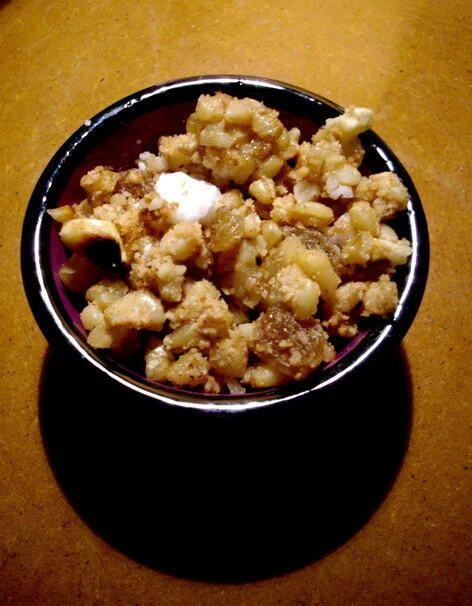
It is our Orthodox Christian Tradition that the faithful attend the divine services and bring the names of their departed relatives and/or friends to be commemorated and prayed for. The names should be the baptismal names of Orthodox Christians and not the last name. Those of you who know how to make kolyva (wheat) should bring a small bowl for the service.
Departed. The dead. Following death and judgment, those who have accepted God's Truth and Love as fully revealed in Christ and the Holy Spirit inherit eternal life in Heaven. Those who have rejected His gift inherit eternal darkness. (See Luke 16:19-31).
The use of wheat (kolyva) at the memorial service. In the gospel of Saint John, we read: Jesus answered them, saying, "... Most assuredly, I say to you, unless a grain of wheat falls into the ground and dies, it remains alone, but if it dies, it produces much grain" (John 12:24). The image of the "grain of wheat" dying in order to bear fruit signifies that Christ will die in order to give life, a principle of self-sacrifice which applies to all those who follow the way of Christ.
Please make every effort to attend the holy services and to bring the names of your loved ones.
With agape,
+Father George